

Social media marketing is no longer limited to building followers and getting likes. For businesses that want measurable growth social media can become an important channel for generating leads building relationships and bringing potential customers into the sales process. A strong social media strategy can help a business reach people who may not have discovered the company through traditional advertising or search engines.
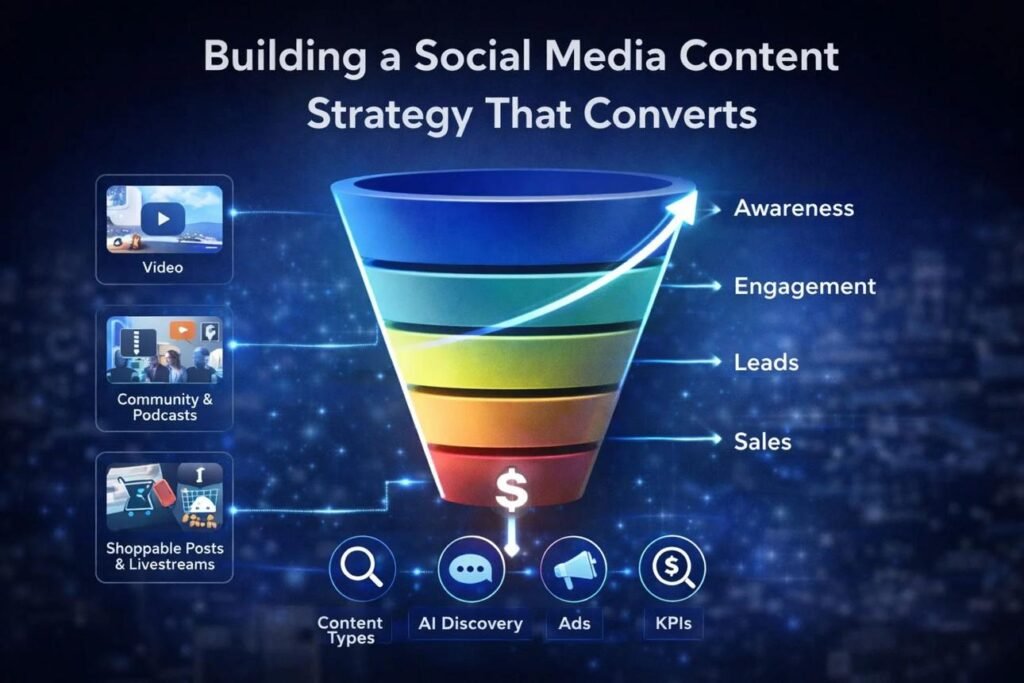
The first step towards using social media for lead generation is understanding the difference between attention and genuine interest. A post may receive thousands of views but that does not necessarily mean the business will receive customers from it. The real value comes from reaching the right people and giving them a clear reason to take the next step.
Every business has a different type of customer. A digital marketing agency may want to reach business owners who need help with online promotion. A restaurant may want to attract people looking for places to eat. A clothing brand may want to reach shoppers interested in a particular style. Social media marketing becomes more effective when content is created around these specific audiences.
Audience research can help businesses understand what potential customers care about. Companies can look at common questions customer comments previous enquiries and conversations with their sales teams. These insights can become useful social media content.
For example if customers regularly ask how much a service costs the business can create a post explaining the factors that influence pricing. If customers often ask how a product works the company can create a short demonstration video. This approach makes social media content more relevant because it is based on real customer needs.
A business should also choose social media platforms based on its audience rather than trying to maintain every possible account. Different platforms attract different types of users and content behaves differently across each platform.
Instagram can be useful for visual storytelling short videos products services and brand awareness. Facebook can help businesses connect with communities and local audiences. LinkedIn can be useful for professional services B2B companies and industry related content. YouTube can support tutorials demonstrations educational videos and longer explanations.
Choosing the right platforms allows a business to focus its time and budget where it has the greatest potential.
Content is one of the most important parts of social media lead generation. A business should not make every post a direct sales pitch. People usually follow accounts because they find the content interesting useful entertaining or inspiring.
Educational content can help demonstrate expertise. A company offering digital marketing services could explain how SEO works how Google Ads campaigns are structured or how businesses can improve their website. These topics can attract people who are already interested in digital marketing.
Problem solving content can be even more valuable. Instead of simply saying that a company provides social media marketing services a business can explain common reasons why social media campaigns fail and what companies can do differently.
This type of content can create curiosity and encourage potential customers to learn more.
Social proof can also support lead generation. Businesses can share genuine customer feedback case studies project results and testimonials when they have permission to do so. Real experiences can help potential customers understand what it is like to work with a company.
Before and after content can also be effective for certain businesses. A design company can show how a website changed after a redesign. A marketing agency can explain how a campaign was improved. A fitness business can share customer progress when appropriate and with permission.
The important factor is authenticity. Businesses should avoid making exaggerated claims that cannot be supported.
Short form video has become an important format for social media marketing. A short video can communicate an idea quickly and can be easier for users to consume while scrolling through their feeds.
A business does not necessarily need expensive equipment to create useful videos. A clear message good lighting understandable audio and helpful information can be more important than highly complicated production.
A simple video explaining one common customer problem can sometimes be more useful than a heavily edited promotional video.
Hooks are also important in short form content. The opening part of a video needs to give people a reason to continue watching. Instead of beginning with a long introduction a business can start by addressing the problem directly.
For example a digital marketing company could begin with a statement about a common advertising mistake and then explain how to avoid it.
Captions can also help people understand the context of a post. They can provide additional information and encourage users to take action.
A call to action can guide interested people towards the next step. Depending on the business this could be visiting a website sending a message requesting a quotation booking a consultation or viewing a product.
A call to action should be relevant to the content.
A post explaining a useful marketing technique might invite people to visit a detailed guide. A product post might encourage customers to explore the product page. A service post might invite potential customers to request more information.
Businesses should avoid using the same call to action on every post.
Social media lead generation can also involve direct messages. Some customers may prefer asking questions through social platforms before making a decision. Businesses should monitor messages and respond professionally.
Fast responses can improve the customer experience. However speed should not come at the expense of accuracy. Businesses should make sure that the information provided through messages is correct.
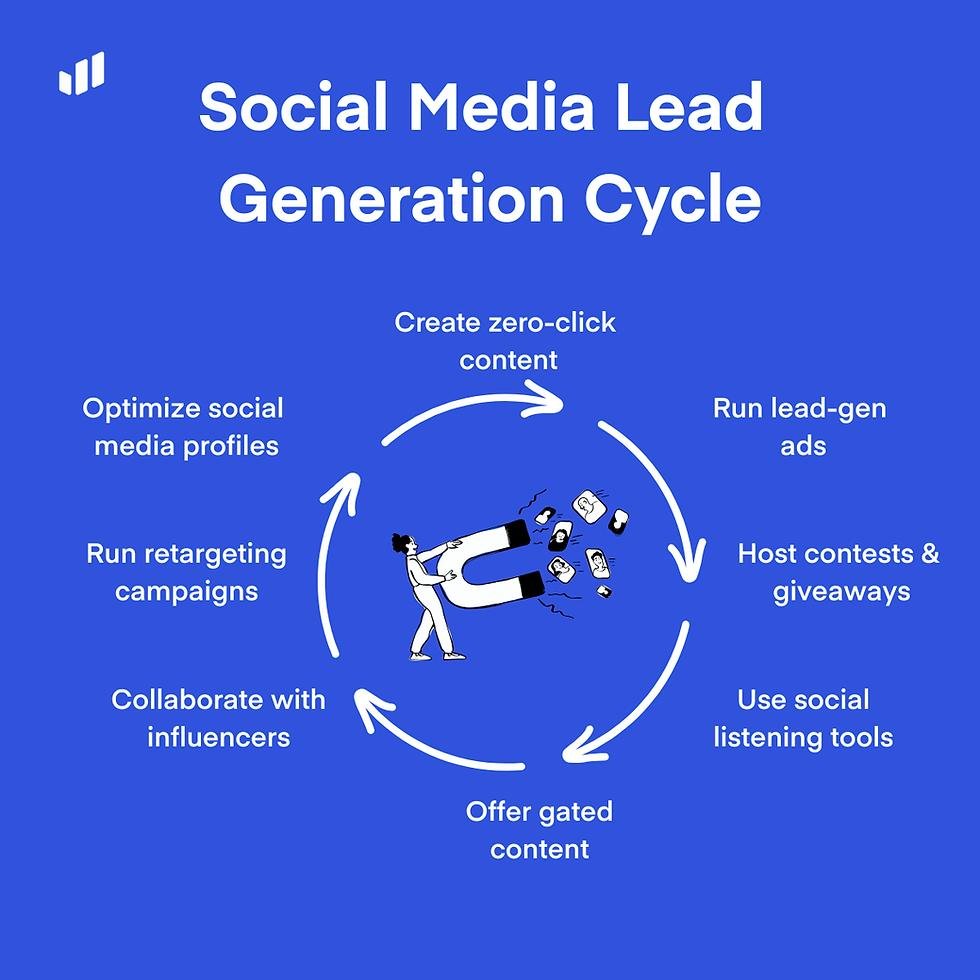
A company can also create lead generation campaigns using paid social media advertising. Paid campaigns can help businesses reach specific audiences and promote offers services products events or content.
Advertising can be particularly useful when a company has a clear target audience and a well defined offer.
However advertising should not be used to cover up weak content or an unclear sales process. If an advertisement attracts people but the landing page does not explain the offer properly the campaign may struggle to generate useful results.
The landing page should match the message of the social media advertisement.
If an advertisement promotes a website design service the visitor should ideally arrive at a page that explains website design rather than a completely unrelated page.
This creates a smoother customer journey.
Lead magnets can also help businesses generate enquiries. A lead magnet is a useful resource offered in exchange for contact information when appropriate. It could be a guide checklist report template or educational resource.
For example a digital marketing agency could offer a basic social media content planning guide. Someone who downloads it may be interested in learning more about social media marketing services.
The resource should provide genuine value. A poor quality download can reduce trust rather than build it.
Social media contests and giveaways can attract attention but businesses should think carefully about whether the audience they attract is relevant. A giveaway may produce many new followers but those followers may not be interested in buying the company’s products or services.
Quality of audience matters more than follower numbers.
Businesses should also think about consistency. Social media marketing works better when customers regularly see useful content from a brand.
Consistency does not necessarily mean posting several times every day. A realistic schedule that the business can maintain is usually more practical.
A content calendar can help organise this process. Businesses can plan educational posts videos customer stories product information industry insights and promotional content in advance.
Planning can also help maintain variety.
A social media account that only publishes promotional posts can quickly become repetitive. Mixing different content types can make the account more useful and interesting.
Engagement should also be part of the strategy. Businesses can respond to comments ask questions and participate in relevant conversations.
Social media users want to interact with real brands rather than simply receive advertisements.
A business can use comments to understand customer concerns. If several people ask the same question the company can create a future post answering it.
This creates a continuous feedback loop between customers and content.
Social media can also support brand trust. People may look at a company’s social profiles before deciding whether to contact it. An active profile with useful content can provide additional reassurance.
This is particularly important for service businesses where customers may want to understand the company’s expertise before making an enquiry.
A social media profile can show how a company communicates what it knows and how it interacts with customers.
Businesses should therefore pay attention to the quality of their profiles. The profile description should explain what the business does. Contact information should be easy to find. Relevant website links should be available where appropriate.
Visual consistency can also help strengthen brand recognition. The same logo style typography and general visual identity can be used across social platforms while allowing each platform to have its own content style.
Social media marketing can also support local businesses. A company that serves a specific area can create location relevant content and show its involvement in the local community.
A local restaurant could highlight new dishes and customer experiences. A local service company could share projects completed in the area. A local agency could publish marketing advice specifically for businesses in its city.
Local relevance can help businesses connect with customers who are more likely to become leads.
Hashtags can sometimes help organise and discover content but they should not replace strong content. Businesses should avoid filling every post with large lists of unrelated hashtags.
Relevant keywords and phrases can be included naturally in captions profiles and video descriptions where appropriate.
Search functionality on social platforms also means that descriptive content can help users understand what a post is about.
Businesses should think about social media as a discovery channel. Someone may search for a topic on a social platform rather than a traditional search engine.
This means useful content can reach people at different stages of their research process.
Analytics are essential for understanding whether a social media strategy is actually working. Businesses should monitor more than likes and followers.
Reach can show how many people saw content. Engagement can indicate whether people interacted with it. Website traffic can show whether social media is sending visitors to the company’s website. Leads can show whether the strategy is generating potential customers.
Sales and revenue can provide an even clearer picture when tracking is properly configured.
A post with a large number of likes is not automatically more valuable than a post with fewer interactions. If the second post produces several qualified enquiries it may have greater business value.
This is why social media reporting should focus on meaningful results.
Businesses can also test different types of content. One month might focus on educational videos while another period could include more customer stories. The company can compare results and learn what its audience responds to.
Testing does not mean changing everything at once. If too many variables change simultaneously it becomes harder to understand what caused the improvement.
A structured approach makes optimisation easier.
Businesses should also be patient. Social media lead generation can take time because people may need several interactions with a brand before they are ready to buy.
A person might first see a video then read a post later and eventually visit the website.
This means social media should support the entire customer journey rather than focusing only on immediate sales.
Retargeting can also help businesses reconnect with people who have already interacted with their content or website when appropriate. These campaigns can remind interested users about a product service or offer.
However advertising should always be handled responsibly and according to applicable platform rules and privacy requirements.
Businesses should never purchase fake followers or engagement. Artificial numbers may make an account appear popular but they do not create a genuine customer base.
Fake engagement can also make analytics less useful because the business cannot clearly understand how real customers are responding.
Authentic growth is more valuable.
Social media marketing can also work together with SEO. A business can promote its blog articles through social media and use social content to introduce topics that are explained in greater detail on its website.
This creates multiple ways for customers to discover the company.
A strong content strategy can therefore connect social media search engine optimisation email marketing and paid advertising.
Each channel can support the others.
The most successful social media marketing strategies are usually based on a clear understanding of the customer. Businesses should know what problems their audience faces what questions they ask and what information they need before making a decision.
When content is built around these needs social media becomes more than a place to publish posts.
It becomes a communication channel.
It can help businesses build awareness demonstrate expertise answer questions generate leads and develop long term relationships with customers.
Social media marketing for lead generation is therefore not about chasing every trend. Trends can provide opportunities but the foundation should remain useful content consistent communication audience understanding and measurable business goals.
A business that focuses on providing value can gradually build an audience that trusts the brand.
That trust can become important when followers eventually need the products or services the business provides.
With a clear strategy the right platforms useful content strong calls to action and regular performance analysis social media marketing can become an important part of a business growth strategy.
The ultimate goal is not simply to collect followers.
The goal is to attract the right people build meaningful relationships and turn genuine interest into valuable business opportunities.
