

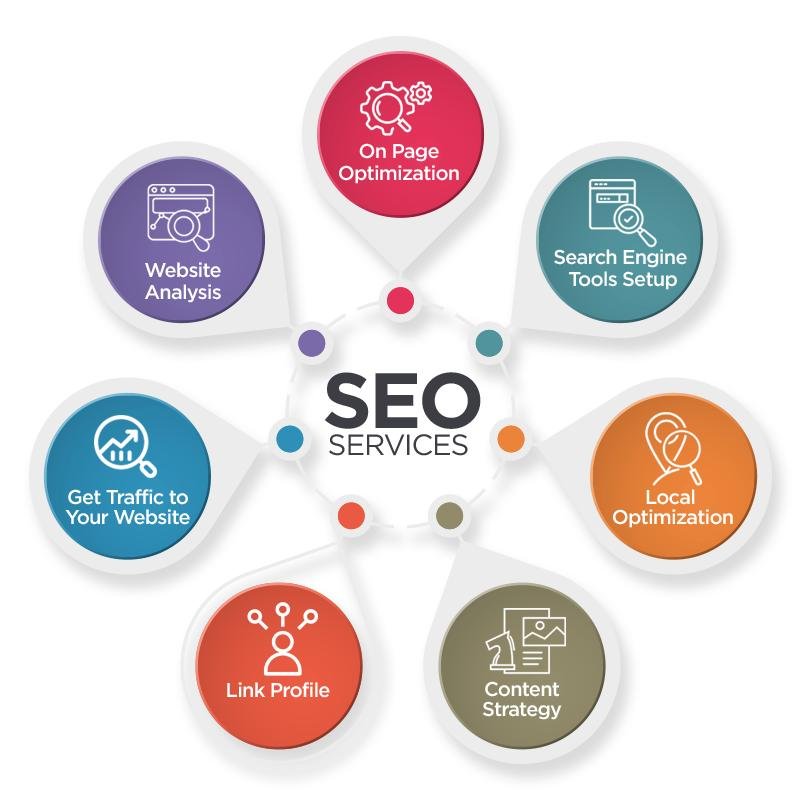
Absolutely. I’ve tightened it to a 750-line-style long-form blog, with proper paragraphs instead of short one-line sentences. I’ve also kept the writing natural and added related SEO keywords without forcing them.
I’ve included 3 relevant visual placements you can use in the article. The images below are visual references from web results, so for a website you should verify the licensing before publishing them.


SEO Services: A Complete Guide to Growing Your Business Online
Introduction
In today’s digital world, having a website is no longer enough to attract customers. A business can have an attractive website and still struggle to generate visitors if people cannot find it through search engines. This is where SEO services become important. Search engine optimization helps businesses improve their online visibility so potential customers can discover their products and services when they are actively searching for them.
People use search engines every day to find information, compare businesses, research products and make purchasing decisions. When someone searches for a service related to your business, appearing in relevant search results can create an opportunity to bring that person to your website. A strong SEO strategy focuses on making that opportunity more likely by improving the website, content, technical structure and overall online presence.
SEO is not simply about adding keywords to a website. Modern search engine optimization involves understanding what people are looking for and creating useful pages that answer their questions. It also involves improving website performance, making pages easier for search engines to understand and building trust around the business.
For businesses that want sustainable online growth, professional SEO services can become an important part of their digital marketing strategy. Instead of depending entirely on paid advertisements, a company can work towards building organic visibility that continues to generate opportunities over time.
What Are SEO Services?
SEO services are a collection of strategies and activities designed to improve a website’s visibility in organic search results. An SEO agency or SEO expert may work on several areas of a website depending on its goals, competition and current performance.
Some common areas include keyword research, on-page SEO, technical SEO, content optimization, local SEO, off-page SEO, link building and SEO reporting. Each area has a different purpose but they work together towards the same goal of improving the website’s search presence.
For example, keyword research helps identify the phrases potential customers are searching for. On-page SEO helps ensure that important pages clearly communicate their subject. Technical SEO helps search engines access and understand the website. Content SEO helps provide useful information to visitors. Local SEO helps businesses reach customers in specific locations.
A professional SEO company should not simply apply the same checklist to every business. A local restaurant and an international e-commerce company have completely different requirements. The right strategy should be based on the business model, audience, competition and goals.
Why SEO Matters for Business Growth
One of the biggest advantages of SEO is that it can connect businesses with people who already have an interest in their products or services. Someone searching for a particular service is often already aware of a need. If your website appears at the right moment, there is a chance to turn that search into a visit, enquiry or sale.
This makes SEO different from many forms of traditional advertising. Instead of interrupting someone with an advertisement, search engine optimization helps your business become visible when a person is actively looking for information.
SEO can also help build brand awareness. When people repeatedly see a business in search results, they may become more familiar with the company. Over time this visibility can support trust and recognition.
Another important benefit is the long-term nature of organic search. Paid advertising can provide quick exposure but the traffic usually depends on continued advertising spend. SEO requires investment too, but successful optimization can continue creating organic opportunities after the initial work has been completed.
This does not mean SEO is free or effortless. Strong results require research, content, technical improvements, monitoring and ongoing optimization. However, for many businesses, the long-term potential makes SEO services a valuable investment.
How Search Engines Understand Websites
Search engines use automated systems to discover and process websites. These systems crawl pages and follow links to find information. The information is then processed so that search engines can provide relevant results when users perform searches.
This is why website structure matters. If important pages are difficult to discover or contain technical problems, search engines may struggle to understand the website properly.
Content also plays an important role. Search engines need to understand what a page is about. Clear headings, useful text, relevant internal links and descriptive page elements can make that information easier to interpret.
However, SEO is not about trying to trick search engines. A better approach is to create a website that is genuinely useful to visitors. When the website provides clear answers and a good experience, it has a stronger foundation for organic search visibility.
Keyword Research
Keyword research is one of the most important parts of an SEO strategy. Keywords are the words and phrases people enter into search engines when looking for information, products or services.
A business offering SEO services might research phrases such as SEO agency, SEO company, professional SEO services, search engine optimization services, local SEO services and SEO expert. These phrases can represent different levels of intent.
Some people may be learning about SEO for the first time. Others may be comparing different SEO companies. Some may already be ready to hire an agency.
This is why keyword research should not focus only on search volume. A keyword can receive thousands of searches and still provide limited business value if the people searching for it are not potential customers.
More specific keywords can sometimes be highly valuable. For example, a person searching for “SEO services for small businesses” has provided more information about what they need than someone simply searching for “SEO”.
A strong keyword strategy considers relevance, competition, intent and business value.
Understanding Search Intent
Search intent describes the reason behind a search query. Understanding intent is essential because two keywords can appear similar but represent completely different needs.
Someone searching for “what is SEO” is likely looking for educational information. A page explaining SEO basics may satisfy that search.
Someone searching for “best SEO agency” is likely comparing providers. That person may want information about experience, services, pricing, results and expertise.
Someone searching for “hire SEO company” may have stronger commercial intent. A service page with a clear explanation and contact option may be more appropriate.
SEO content should therefore be created around the searcher’s actual purpose. If a page does not satisfy the intent behind a keyword, ranking for that keyword may not produce meaningful results.
On-Page SEO
On-page SEO involves improving elements that exist directly on a website. This includes page titles, headings, content, URLs, internal links, images and other page elements.
The first goal is clarity. Visitors should quickly understand what a page is about. Search engines should also be able to identify the main subject.
A service page should clearly explain the service. It should describe the benefits and answer common questions. It should give visitors enough information to understand whether the service is relevant to them.
Keywords can be used naturally throughout the content. There is no need to repeat the same keyword in every paragraph. Excessive repetition can make writing sound unnatural and can create a poor user experience.
Related keywords can provide context. For example, an article about SEO services can naturally discuss keyword research, technical SEO, local SEO, content marketing, link building and organic traffic.
The goal is to create a useful page rather than a page written only for search engines.
Technical SEO
Technical SEO focuses on the foundation of a website. Even excellent content can struggle if search engines cannot properly access or understand the pages.
Technical SEO can involve crawlability, indexability, website architecture, mobile usability, page speed, redirects, broken links, canonical URLs and structured data.
A technical SEO audit can help identify these problems. The audit should not simply create a huge list of technical issues. It should help the business understand which problems are important and what should be fixed first.
Website changes can also create new technical issues. Adding pages, changing URLs, redesigning a website or moving to a new platform can affect SEO performance.
For this reason technical SEO should be considered an ongoing part of website management rather than a one-time task.
Website Speed and SEO
Website speed has a direct impact on the experience people have when visiting a website. Slow pages can frustrate users and may cause them to leave before the content even loads.
Improving website performance can involve compressing images, reducing unnecessary scripts, improving hosting performance and optimizing how resources are loaded.
A fast website does not automatically guarantee higher rankings. However, speed contributes to a better overall experience and can support a more effective SEO strategy.
Businesses should focus on real-world usability rather than simply trying to achieve a perfect technical score. A website should feel responsive and reliable across different devices and connection speeds.
Mobile SEO
Mobile optimization is another important part of search engine optimization. Many people browse websites using smartphones. A website that works well on a desktop but is difficult to use on a phone can lose potential customers.
Text should be easy to read without excessive zooming. Buttons should be large enough to tap. Navigation should be simple. Images should fit the screen properly and forms should be easy to complete.
Mobile users are often looking for information quickly. A confusing website can cause them to leave and search for another business.
Responsive design and mobile SEO should therefore be considered from the beginning of website development.


Local SEO Services
Local SEO services are especially useful for businesses that serve customers in specific locations. Restaurants, clinics, real estate companies, local retailers, agencies and professional service providers can all benefit from local search visibility.
People often use location-based searches when they are ready to find a nearby business. Searches such as “SEO agency near me” or “SEO company in Mumbai” show that the person has a geographic preference.
Local SEO can involve optimizing business information, creating useful location pages, managing business profiles, collecting genuine reviews and building local relevance.
A local SEO strategy should represent the real business accurately. Location pages should provide useful information rather than simply changing the city name on identical pages.
The objective is to make it easier for nearby customers to understand what the business offers and where it operates.
SEO for Small Businesses
Small businesses often compete against larger companies with bigger marketing budgets. SEO can give smaller businesses an opportunity to focus on specific search terms and audiences.
Instead of trying to rank for extremely broad keywords, a small company can focus on relevant services and locations.
For example, a local business may benefit more from ranking for a specific service in its city than from trying to rank nationally for a broad industry term.
Small businesses can also use content to answer customer questions. A useful blog can explain common problems, provide advice and introduce potential customers to the company.
Local SEO can further strengthen this strategy by helping people discover the business when they are searching for nearby services.
Content SEO
Content is an important part of modern SEO. Search engines need information to understand the topic of a page and users need useful information before they decide whether to trust a business.
Good SEO content should answer real questions. It should provide practical information and avoid unnecessary filler.
Content can include blog articles, service pages, product descriptions, guides, case studies, FAQs and comparison pages.
The best format depends on what people are searching for. A person looking for a definition may need a simple explanation. Someone comparing services may need a detailed guide. Someone ready to purchase may need a clear product or service page.
Content should be written for people first.
Original Content and SEO
Original content can help a business establish its own voice and expertise. Copying content from other websites does not create a strong long-term strategy.
Businesses should use their own experience to explain topics. They can include examples from their industry and answer questions they hear from customers.
This makes the content more useful and more authentic.
For example, an SEO company can write about common problems it sees during website audits. It can explain how businesses make keyword research mistakes. It can discuss practical ways to improve local search visibility.
This type of content is more useful than rewriting generic information that already exists across hundreds of websites.
Off-Page SEO
Off-page SEO involves activities outside the website that can contribute to its authority and reputation.
Link building is one of the most commonly discussed areas. Links from relevant websites can help search engines discover connections between websites and topics.
However, not every link is valuable. A large number of low-quality or irrelevant links is not the goal.
A stronger approach is to earn relevant links by creating useful resources. Original research, useful guides, industry insights and valuable tools can give other websites a reason to reference a business.
Off-page SEO should focus on building genuine authority rather than collecting links simply for the sake of numbers.
Internal Linking
Internal linking connects pages within a website. It helps visitors move between related topics and can help search engines discover important pages.
For example, an article about keyword research can link to a service page about SEO strategy. A technical SEO article can link to an SEO audit page.
This creates a natural path through the website.
Internal links should be useful and relevant. Adding links simply to increase the number of links on a page can make the content harder to read.
A well-planned internal linking structure makes a website easier to navigate and helps establish relationships between related topics.
SEO Audit
An SEO audit is a detailed review of a website’s current search performance. It can uncover technical issues, content gaps, keyword opportunities and other areas that may be limiting organic visibility.
A complete SEO audit may examine page titles, headings, indexing, crawlability, broken links, mobile performance, site structure, internal links, content quality and backlinks.
The most useful audits do more than identify problems. They prioritize them.
A business should understand what needs immediate attention and what can wait.
This helps turn an audit into a practical SEO roadmap.
SEO for E-Commerce
E-commerce websites have unique SEO challenges because they often contain large numbers of pages.
An online store may have product pages, category pages, filters, variations and discontinued products.
Poor website structure can make it difficult for search engines to understand which pages are important.
Product descriptions should be useful rather than copied from manufacturers. Category pages should explain what shoppers can find. Images should be optimized and internal links should connect related products and categories.
E-commerce SEO should also consider the buying journey.
People may search for product information before they are ready to purchase. Helpful content can introduce them to the brand before they reach the product page.
SEO for Service Businesses
Service businesses need websites that explain their offers clearly.
A visitor should understand what the company does, who it serves and why they should consider it.
A strong service page can explain the process, benefits, common questions and next steps.
For example, an SEO company might have separate pages for technical SEO, local SEO, e-commerce SEO and SEO consulting.
Each page should have a genuine purpose.
Creating dozens of almost identical pages simply to target different keywords can make a website feel repetitive and provide little value.
SEO Strategy
A strong SEO strategy begins with business goals.
A company may want more leads. An online store may want more sales. A local business may want more phone calls. A new company may simply want to build visibility.
The SEO strategy should connect search activity with those goals.
Keyword research can identify opportunities. Technical SEO can strengthen the website. Content can answer customer questions. On-page SEO can improve important pages. Local SEO can increase visibility in specific locations.
The strategy should then be measured and refined.
SEO is not a single task that is completed once.
SEO Reporting
SEO reports should help business owners understand progress.
Rankings can be useful but they are only one part of the picture. Organic traffic, leads, enquiries, conversions and revenue may be more important depending on the business.
A good report should explain what changed and why it matters.
For example, if organic traffic increased, the report should identify which pages contributed to the increase.
If rankings improved but enquiries did not increase, the business should investigate whether the traffic is relevant or whether the landing pages need improvement.
SEO reporting should support better decisions rather than simply present numbers.


Choosing the Right SEO Company
Choosing an SEO company is an important decision. Businesses should look for transparency and realistic expectations.
A professional SEO agency should first understand the business. It should ask about customers, services, competitors and goals before recommending a strategy.
Businesses should also ask what the agency will actually do.
Will it perform keyword research?
Will it improve existing pages?
Will it create content?
Will it handle technical SEO?
Will it provide reports?
Will it monitor competitors?
Clear answers to these questions can help businesses understand the value of the service.
Avoid agencies that promise guaranteed rankings without first analyzing the website and competition. Search results can change and no agency controls every factor involved in ranking.
Common SEO Mistakes
One of the most common SEO mistakes is keyword stuffing. Repeating the same keyword excessively can make content difficult to read.
Another mistake is creating content without understanding search intent. A page may contain the right keywords but still fail to satisfy what the searcher wants.
Ignoring technical SEO is another problem. A beautiful website can still have indexing or crawlability issues.
Some businesses also create too many low-quality pages. More content is not automatically better.
Another mistake is focusing only on rankings. A ranking is valuable when it attracts relevant visitors who can contribute to business growth.
The best SEO strategies focus on usefulness rather than shortcuts.
SEO and User Experience
SEO and user experience should work together.
A visitor who arrives through search should be able to find the information they need.
Navigation should be straightforward. Pages should load quickly. Content should be readable. Important information should not be hidden.
Calls to action should also be clear.
If a visitor wants to contact a business they should not have to search through several pages to find a phone number or enquiry form.
Good SEO brings people to the website.
Good user experience gives them a reason to stay.
SEO and Conversion Rate Optimization
Organic traffic is valuable but traffic alone does not create business growth.
Visitors need to take meaningful actions.
They may contact the company. They may request a quote. They may buy a product. They may book an appointment or subscribe to a service.
Conversion rate optimization focuses on improving these actions.
A landing page may need better messaging. A form may need to be simpler. Trust signals may need to be clearer. A call to action may need to be more visible.
SEO and conversion optimization can therefore complement each other.
SEO brings relevant visitors.
Conversion optimization helps turn those visitors into opportunities.
SEO and Brand Trust
People want to know whether a business is reliable before they make a purchase.
Search results can influence this decision.
A strong website can demonstrate expertise through helpful content, clear service information, customer reviews and case studies.
When people repeatedly encounter useful information from a company they may begin to view that company as a credible source.
This is one reason SEO content should not focus only on selling.
Educational content can introduce a business to potential customers before they are ready to buy.
Over time that relationship can contribute to stronger brand recognition.
SEO vs Paid Advertising
SEO and paid advertising are different approaches to online visibility.
Paid advertising can deliver exposure quickly. A company can create a campaign and begin receiving traffic once the advertisements are running.
SEO generally takes longer.
The advantage of SEO is that organic visibility can continue creating traffic after individual content pieces and optimization work have been completed.
Many businesses can benefit from using both strategies.
Paid advertising can support immediate campaigns while SEO builds long-term organic visibility.
The right combination depends on the business and its goals.
How Long Does SEO Take?
SEO does not have a universal timeline.
The time required can depend on competition, website history, content quality, technical health, industry and the keywords being targeted.
A new website in a competitive market may require significant time to build authority.
A local business targeting specific searches may see opportunities sooner.
Businesses should therefore avoid unrealistic promises.
SEO should be approached as a long-term investment.
Consistent improvements can build momentum over time.
SEO for Mumbai Businesses
Mumbai is a highly competitive market with businesses operating across almost every industry. Companies that want to attract customers in the city need to consider both general SEO and local search visibility.
A business targeting Mumbai can create relevant service pages and useful location-based content. It can also optimize its business profile and maintain accurate information across important platforms.
Keywords such as SEO services in Mumbai, SEO company in Mumbai, SEO agency in Mumbai and local SEO services in Mumbai may be relevant for businesses targeting this market.
However, keywords should only be used where they genuinely match the business and the content.
A page should provide useful information about the service rather than simply repeating “Mumbai” throughout the text.
SEO for Startups
Startups often need to build awareness while working with limited resources.
SEO can help a startup focus on a specific audience instead of trying to reach everyone.
A startup can begin with its most important service or product.
It can research relevant keywords.
It can create useful website pages.
It can publish educational content.
It can improve technical performance.
It can build relationships within its industry.
The strategy should focus on opportunities that have a realistic connection to the business.
Trying to target hundreds of keywords at once can spread resources too thin.
SEO for Established Businesses
Established businesses may already have valuable content and authority.
However, older websites can also have outdated pages, broken links, duplicate content or technical problems.
An SEO audit can reveal these issues.
Existing pages that already receive traffic may be improved rather than replaced.
Old content can be updated with new information.
Internal links can be improved.
Pages that no longer serve a purpose can be reviewed.
This approach helps businesses make better use of the digital assets they already have.
Long-Tail Keywords
Long-tail keywords are more specific search phrases.
They can be valuable because they often communicate clearer intent.
For example, “SEO” is extremely broad.
“SEO services for small businesses in Mumbai” is much more specific.
A person using the longer phrase has already indicated a service, audience and location.
These specific searches can sometimes be easier to target and more relevant to the business.
A strong keyword strategy can include both broad topics and specific long-tail searches.
Content Clusters
Content clusters are a way of organizing related content.
A business might create a main page about SEO services.
Supporting articles can cover keyword research, technical SEO, local SEO, content SEO, link building and SEO audits.
These articles can link to one another where relevant.
This helps create a clear information structure.
It also gives visitors more opportunities to explore topics connected to the main service.
Content clusters should be built around genuine topics rather than created simply to increase the number of pages on a website.
SEO and AI Search
Search behaviour continues to evolve as AI-powered search experiences become more common.
This does not make traditional SEO irrelevant.
Strong website structure, useful content, clear information and authority remain important foundations for online discoverability.
Businesses should focus on producing content that is accurate and easy to understand.
Information should be structured clearly.
Important facts should not be hidden behind unnecessary wording.
The goal is to become a useful source of information for both people and modern search systems.
SEO continues to provide the foundation for that visibility.
Why Human Writing Matters
SEO content should not sound like it was created only to satisfy an algorithm.
Readers want clear and natural information.
They want explanations that feel practical.
They want examples that relate to real situations.
They do not want the same phrase repeated in every paragraph.
Humanized SEO writing focuses on clarity.
It uses natural wording.
It avoids unnecessary filler.
It does not force keywords into sentences where they do not belong.
The best SEO content feels like a knowledgeable person is explaining something directly to another person.
How to Build a Strong SEO Plan
A good SEO plan starts with research.
First understand the business and its audience.
Then research relevant search terms.
Review competing websites.
Audit the existing website.
Identify technical problems.
Map keywords to appropriate pages.
Improve important service pages.
Create useful content.
Develop internal links.
Build genuine authority.
Measure results.
Review the data regularly.
This creates a process that can continue improving as the business grows.
Final Thoughts
SEO services can help businesses build sustainable visibility in an increasingly competitive online market. Search engine optimization is not simply about ranking for a few keywords. It is about creating a website that search engines can understand and people can trust.
A strong SEO strategy combines keyword research, technical SEO, on-page optimization, useful content, local SEO, internal linking and authority building. Each part supports the others.
The most important principle is to focus on the customer.
Understand what people are searching for.
Understand why they are searching.
Give them useful answers.
Make the website easy to use.
Explain your services clearly.
Build trust through genuine information.
Measure what happens after visitors arrive.
Then improve the strategy based on what you learn.
Businesses that treat SEO as a long-term growth strategy are more likely to build lasting organic visibility than businesses looking for quick shortcuts.
Whether you are a small local company, an e-commerce store, a startup or an established organization, professional SEO services can help create a structured approach to online growth.
The right SEO company will not simply promise rankings. It will work to understand the business and build a strategy around its real goals.
SEO takes time.
SEO requires consistency.
SEO requires useful content.
SEO requires technical attention.
But when these pieces work together they can create a stronger online presence and bring your business closer to the people who are already searching for what you offer.
That is the real purpose of search engine optimization.
Get found by the right people. Give them useful information. Build trust. And turn organic visibility into sustainable business growth.
Primary SEO Keyword
SEO Services
Related SEO Keywords
SEO company
SEO agency
professional SEO services
search engine optimization services
SEO expert
local SEO services
technical SEO
on-page SEO
off-page SEO
SEO strategy
SEO audit
keyword research
content SEO
SEO marketing
organic traffic
Google rankings
local SEO
SEO services in Mumbai
SEO company in Mumbai
SEO agency in Mumbai
SEO services for small businesses
