

E-commerce SEO focuses on improving the visibility of online stores in search engines. It helps products categories and useful shopping content become easier for potential customers to discover.
Online shopping behaviour has changed significantly. Customers often research products before making a purchase. They may compare prices read reviews explore features and search for alternatives.
This creates opportunities for ecommerce websites to attract customers through organic search.
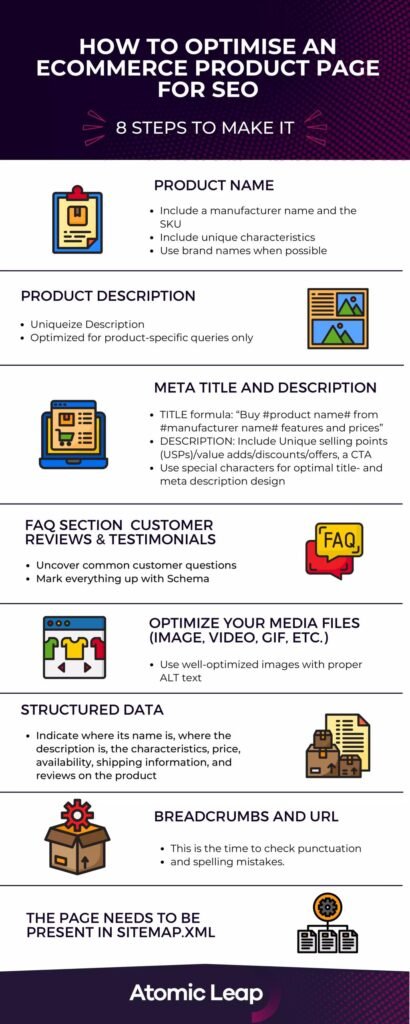
Product pages are at the centre of ecommerce SEO. Each product page should clearly explain what the product is and why someone might want it.
Product titles should be descriptive and easy to understand. Product descriptions should provide useful information rather than simply repeating manufacturer text.
Original product descriptions can help create a more useful website.
Category pages are also important. A category page can target broader searches while individual product pages target specific product searches.
For example an online clothing store may have a category page for men’s running shoes and individual pages for specific shoe models.
The category page should explain the products available and help customers choose between options.
Product images are particularly important for ecommerce websites. Customers cannot physically examine products through a screen so images need to provide useful visual information.
Images should be high quality while remaining properly optimised for website performance.
Alt text can describe what the image shows and can support accessibility.
Product reviews can also improve the shopping experience. Customers often want to know how other people experienced a product before purchasing.
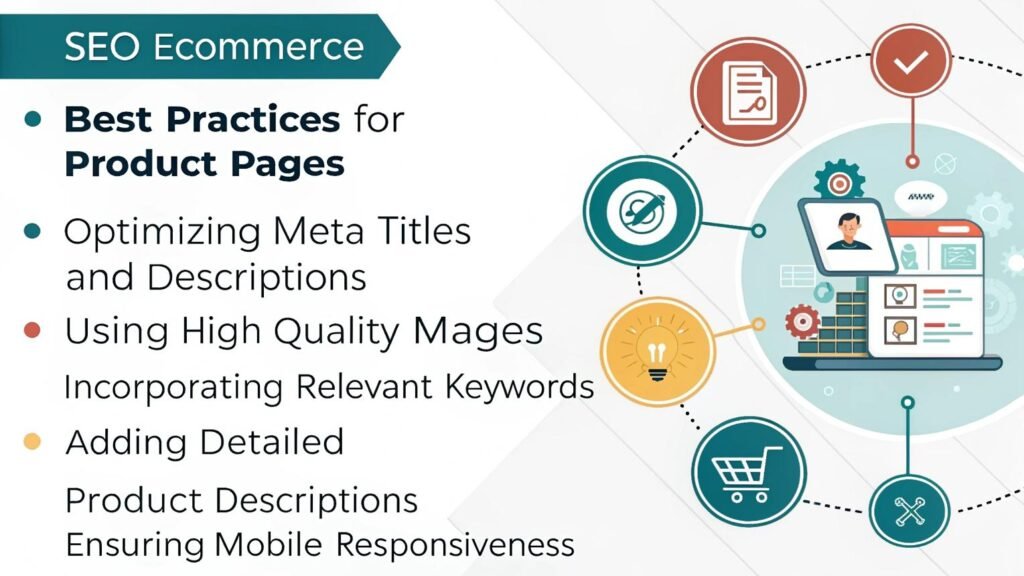
Genuine reviews can provide useful information about quality size performance or usability.
Product structured data can also help search engines understand information about products. Depending on the website and implementation this can provide search engines with information such as product details pricing availability and reviews.
Technical SEO is particularly important for large ecommerce websites.
Online stores can contain hundreds or thousands of pages. Product filters sorting options and product variations can create many URLs.
Without a clear technical strategy search engines may discover unnecessary versions of pages.
A well planned website architecture can help search engines and visitors understand the relationship between categories products and supporting content.
Internal linking can also help.
A category page can link to relevant products. Blog content can link to useful categories. Product pages can connect to related products.
These connections create a smoother shopping journey.
Keyword research is another important part of ecommerce SEO.
Customers may use different phrases at different stages of the buying process.
Someone may search for best running shoes. Another person may search for men’s running shoes for beginners. Someone who already knows the product may search for a specific model.
The website should provide appropriate pages for these different searches.
Informational content can also support ecommerce websites.
A store selling fitness equipment could publish articles about choosing home workout equipment. A clothing store could publish guides about selecting the right size. A technology retailer could explain how to compare product features.
These articles can attract people earlier in the buying journey.
Content can then connect naturally to relevant products.
This creates an opportunity to turn informational traffic into potential customers.
Page speed is particularly important for online stores because ecommerce websites often contain many images and scripts.
Slow pages can make browsing difficult.
Customers may leave before completing a purchase.
Mobile optimisation is equally important because many people shop using smartphones.
Product images should fit smaller screens. Product information should remain readable. Buttons should be easy to use.
Checkout processes should also be straightforward.
SEO can bring visitors to an ecommerce website but the shopping experience ultimately influences whether those visitors purchase.
This means SEO and conversion optimisation should work together.
Product pages should answer important questions before customers need to ask them.
Information about sizes materials delivery returns availability and payment options can help reduce uncertainty.
Clear navigation also matters.
Customers should be able to move between categories products and supporting content without getting lost.
Search functionality can be useful for larger stores.
Customers who already know what they want may prefer to search directly rather than browse multiple categories.
Ecommerce SEO is therefore a combination of technical optimisation content product information user experience and keyword strategy.
The goal is not simply to rank product pages.
The goal is to help customers discover the right products and move through the shopping journey easily.
Businesses should monitor ecommerce SEO performance regularly.
They can review organic traffic product visibility clicks conversions and other relevant metrics.
Pages that receive traffic but produce few sales may need improvements.
Pages that have strong conversion performance but low visibility may represent opportunities for additional SEO work.
An ecommerce SEO strategy should evolve as the product catalogue changes.
New products are added. Old products become unavailable. Seasonal products appear. Customer behaviour changes.
Product pages should therefore be reviewed regularly.
SEO can become a long term source of customers for online stores when the website is structured properly and content remains useful.
Instead of relying entirely on paid advertising an ecommerce business can build organic visibility that continues to attract relevant searches over time.
The strongest ecommerce SEO strategies focus on the customer first.
When product information is useful navigation is clear technical problems are controlled and content matches search intent the website becomes more valuable to both shoppers and search engines.
