

An SEO audit is a detailed review of a website’s search engine optimisation. It helps businesses understand what is working what needs improvement and where new opportunities may exist.
A website can develop SEO problems over time. New pages are published old pages are removed links change website designs are updated and technical settings can be modified.
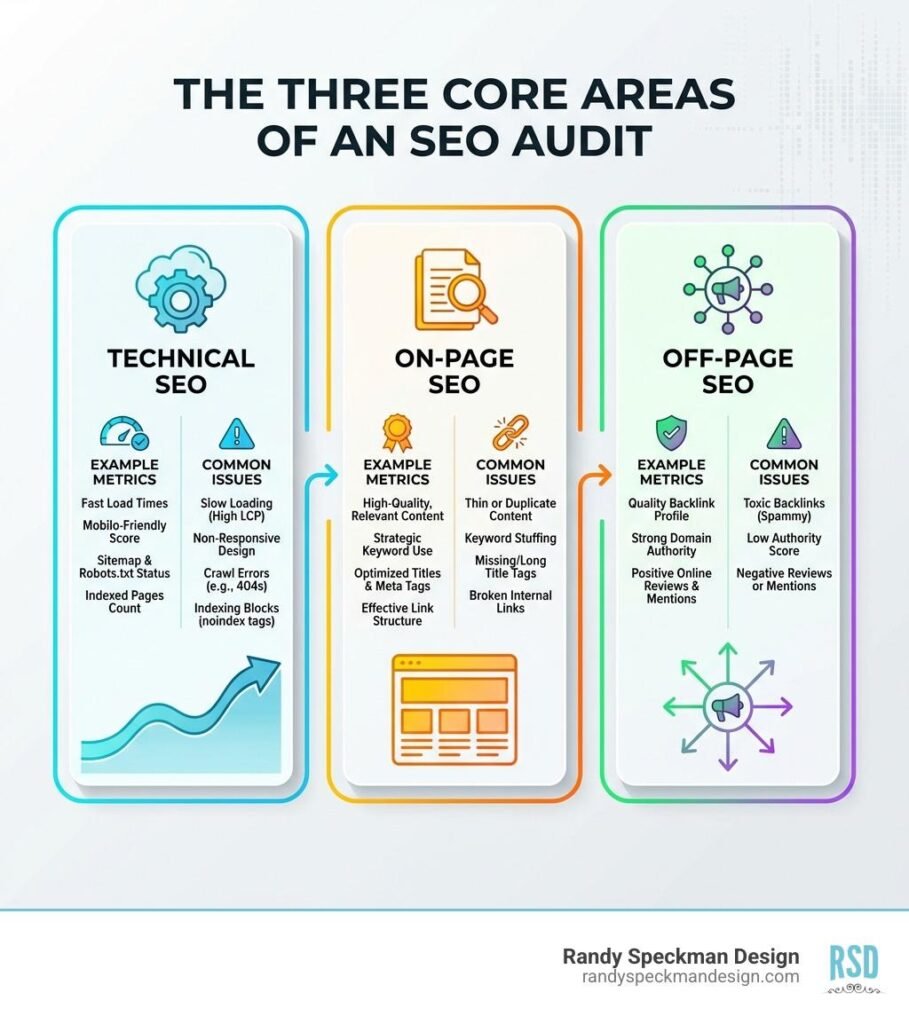
An SEO audit provides an opportunity to review the website as a whole.
Technical SEO is usually one of the main areas reviewed during an audit. The process can include checking crawlability indexing redirects broken links sitemap configuration mobile usability and page performance.
A website may have valuable content that search engines cannot easily discover. Identifying these technical barriers is an important part of an SEO audit.
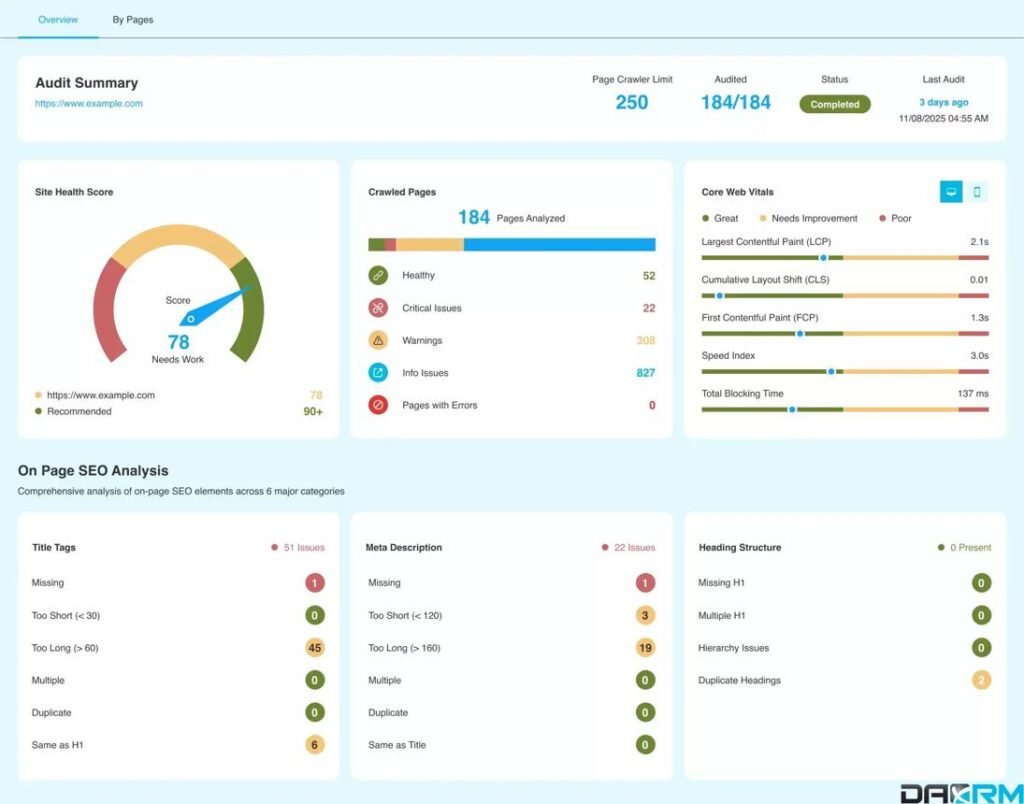
On page optimisation is another major area. An audit can review page titles headings meta descriptions URLs content structure internal links and image optimisation.
The purpose is not to find a keyword on every page. The purpose is to understand whether each page clearly communicates its subject and satisfies its intended search.
Content quality should also be evaluated.
Some websites have large amounts of content but very little useful information. Other websites may have excellent articles that are no longer updated.
An SEO audit can help identify pages that should be improved combined redirected or removed.
Keyword targeting is another area worth reviewing. Businesses may discover that important services have no dedicated pages or that several pages are competing for similar keywords.
Keyword mapping can help resolve these issues.
Search intent should also be considered. A page may target a keyword but still fail to satisfy what users expect.
For example someone searching for an informational guide may not want to land on a purely promotional page.
A good SEO audit evaluates the relationship between keywords content and user expectations.
Internal linking can also be reviewed. Important pages should be connected logically through relevant links.
A website with strong content but weak internal linking may make it harder for visitors to discover related resources.
Image optimisation is another useful area. Large images can slow down pages. Missing alt text can reduce accessibility.
An audit can identify images that need better filenames compression or descriptive alternative text.
Page speed and mobile usability are also important.
A website should provide a smooth experience across different screen sizes.
Navigation should be straightforward. Text should be readable. Interactive elements should work properly.
Backlinks can also be reviewed as part of an SEO audit. The purpose is to understand the overall backlink profile and identify relevant opportunities.
Not every backlink needs to be treated as a problem. The focus should be on understanding the overall profile and identifying anything that may require closer attention.
Competitor research can add another layer to the audit.
A business can compare its website with competitors to identify content gaps keyword opportunities and areas where competitors provide a better user experience.
This does not mean copying competitors.
The objective is to understand the market and identify ways to create a stronger website.
Local businesses can include a local SEO review in their audit. This may include business information reviews local landing pages and local search visibility.
Ecommerce websites can also benefit from specialised SEO audits. Product pages category pages filters internal search and duplicate URLs may require additional attention.
The audit should result in practical recommendations.
A long list of technical terms is not enough. Businesses need to know which problems should be fixed first and why they matter.
Prioritisation can make the SEO process much more manageable.
Critical indexing problems may need immediate attention. Content improvements may then follow. Smaller technical changes can be handled later.
An SEO audit should therefore be viewed as a roadmap rather than simply a report.
It can help a business understand where the website is today and what should happen next.
Regular audits can be useful because websites change continuously.
A website that was technically healthy six months ago may have new issues after several updates.
SEO audits can also be performed before website redesigns or migrations.
Identifying important URLs and content before a migration can help reduce the risk of losing search visibility.
A good SEO audit combines technical analysis content evaluation keyword research user experience and competitor research.
The exact process can vary depending on the website.
The most important part is turning the findings into practical improvements.
