

Technical SEO is the part of search engine optimisation that focuses on the technical foundation of a website. While content explains what a website is about technical SEO helps search engines access process and understand that content.
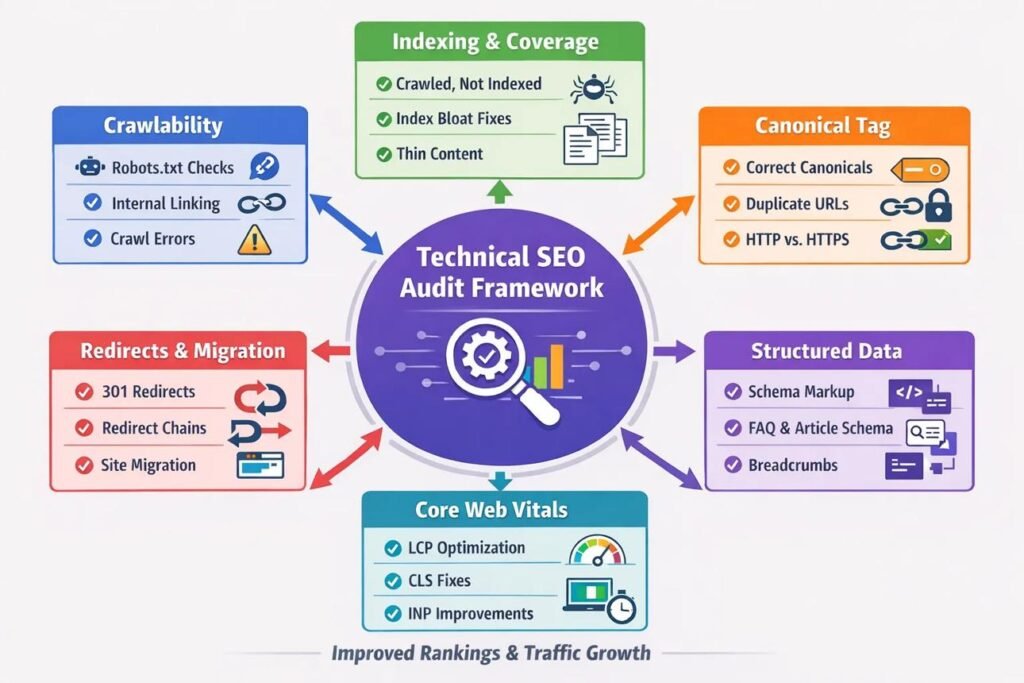
A website can have excellent articles attractive design and useful services but technical problems can still prevent important pages from performing well. If search engines cannot properly crawl or index a page the content may not reach the audience it was created for.
Technical SEO begins with crawlability. Search engine crawlers visit websites and discover pages through links and other signals. A well organised website makes important pages accessible.
Broken links can make this process more difficult. They can also frustrate visitors. Regular website checks can help identify links that no longer work.
Indexing is another major part of technical SEO. When a page is indexed it becomes part of a search engine’s database and can potentially appear in search results. Businesses should check whether their important pages are being indexed correctly.
An XML sitemap can help search engines discover important website URLs. It provides a structured list of pages that the site wants search engines to know about. A sitemap is useful but it does not guarantee that every URL will rank.
The robots.txt file provides instructions about crawler access. It can be useful for controlling certain areas of a website. However incorrect settings can sometimes block pages that should remain accessible.
Website architecture is also important. A clear structure makes it easier for visitors to move from one page to another. It also helps search engines understand how pages are related.
For example a website may have a main SEO services page followed by pages about local SEO technical SEO and content SEO. Supporting blog articles can then connect to these service pages through internal links.
Page speed is another important consideration. Visitors expect websites to load quickly. When a page takes too long to appear people may leave before reading the content.
Large images are a common cause of slow loading. Unoptimised scripts excessive plugins and inefficient code can also affect performance. Improving these areas can create a smoother experience.
Mobile usability is now essential for most websites. People frequently access websites using smartphones. A page that works perfectly on a desktop but poorly on mobile can create a frustrating experience.
Mobile pages should have readable text. Buttons should be easy to use. Navigation should remain simple. Important information should not be hidden behind complicated interactions.
HTTPS is another technical consideration. A secure connection helps protect information exchanged between a visitor and a website. Businesses should make sure that their important pages are served securely.
Redirects are useful when URLs change. If an old page moves to a new location a redirect can help visitors and search engines reach the new page. Poorly managed redirects can create chains or loops.
Canonical URLs can help communicate which version of a page should be considered the main version when similar URLs exist. This can be useful on websites that have product variations filters or other systems that generate multiple URLs.
Duplicate content can also become a technical issue. Some duplication is normal but unnecessary copies of similar pages can make website structure harder to manage.
Ecommerce websites can face more complex challenges because they may have thousands of product pages. Filters sorting systems and product variations can create many different URLs.
Technical SEO can help businesses manage these structures more effectively. The goal is to make sure useful pages can be discovered while unnecessary versions do not create confusion.
JavaScript can also affect how content is presented. Modern websites often rely on scripts for menus animations and interactive elements. Important content should still be accessible and understandable.
Website redesigns are another time when technical SEO becomes particularly important. When a business changes its website structure it may also change URLs. If old URLs are not properly redirected valuable traffic and links can be lost.
This is why technical SEO should be considered before a major website launch rather than after the redesign is complete.
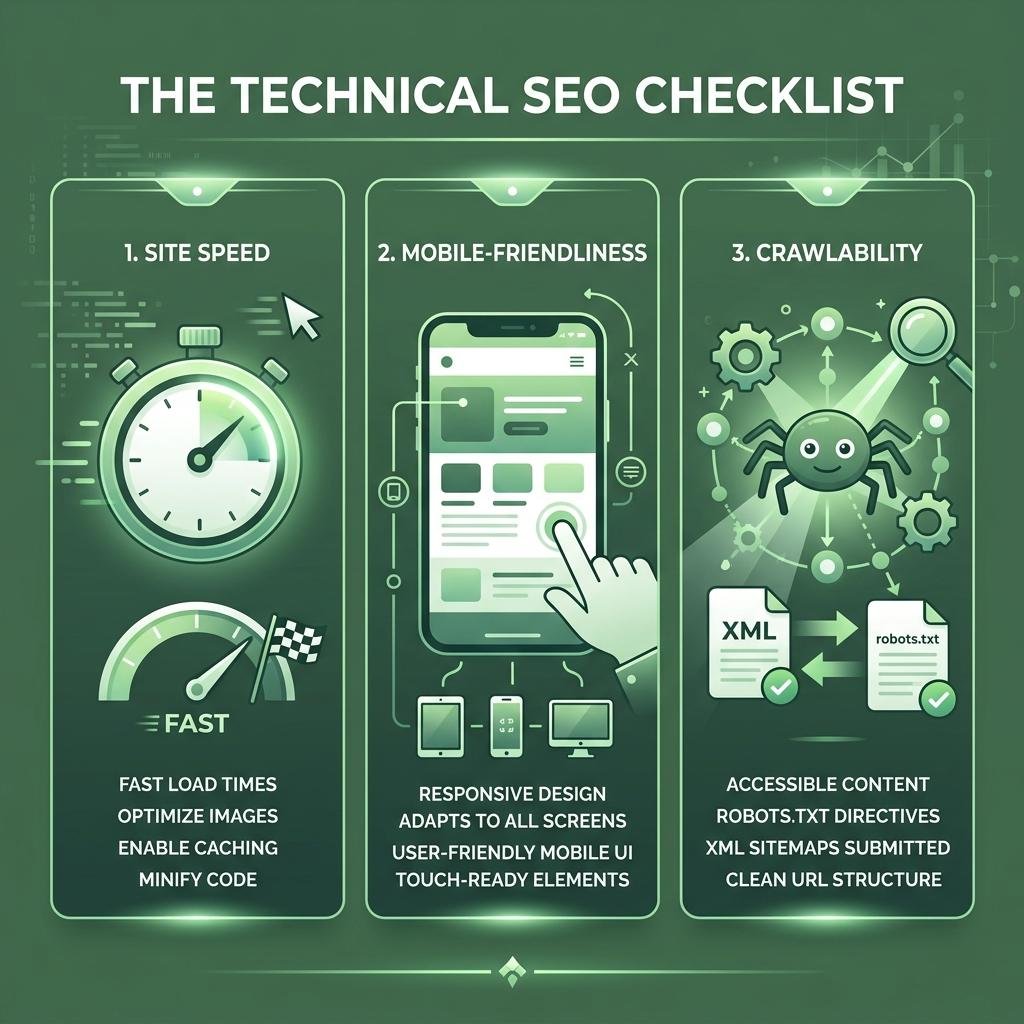
A technical SEO audit can identify many of these issues. An audit may review crawling indexing page speed mobile usability redirects broken links sitemap configuration and website architecture.
Not every problem needs to be fixed at the same time. Businesses should prioritise issues based on their potential impact. Critical indexing problems usually deserve attention before minor technical improvements.
Technical SEO should also be monitored after changes are made. A website is never completely static. New pages are added. Old pages are removed. Plugins are installed. Designs are changed. New features can create unexpected problems.
Regular monitoring helps businesses find issues before they become larger.
Technical SEO is sometimes misunderstood as something only developers need to worry about. In reality marketers content writers business owners and website managers can all benefit from understanding the basics.
A healthy technical foundation supports every other SEO activity.
Content cannot perform effectively if important pages cannot be crawled. Internal links cannot help if pages are broken. A strong marketing strategy can be weakened by a website that is difficult to use.
Technical SEO therefore works behind the scenes while supporting the entire website experience.
The goal is not to make a website technically complicated. The goal is to remove unnecessary barriers and create a clean structure that works for users and search engines.
When technical SEO is combined with valuable content strong on page optimisation and a useful website structure it creates a much stronger foundation for long term organic visibility.
