

On page SEO is one of the most important areas of search engine optimisation. It focuses on elements that exist directly on a website and helps search engines understand what individual pages are about. At the same time good on page optimisation makes information easier for visitors to read understand and navigate.
A website may have excellent products and services but that does not automatically mean every page will appear prominently in search results. Search engines need context. They need to understand the subject of a page and determine whether the content is useful for a particular search.
On page SEO helps provide that context. It includes page titles headings content structure URLs internal links images and other elements that contribute to the overall quality of a webpage.
The first step is usually understanding the purpose of the page. Every important page should have a clear reason for existing. A service page should explain a service. A product page should explain a product. A blog article should answer a question or provide useful information.
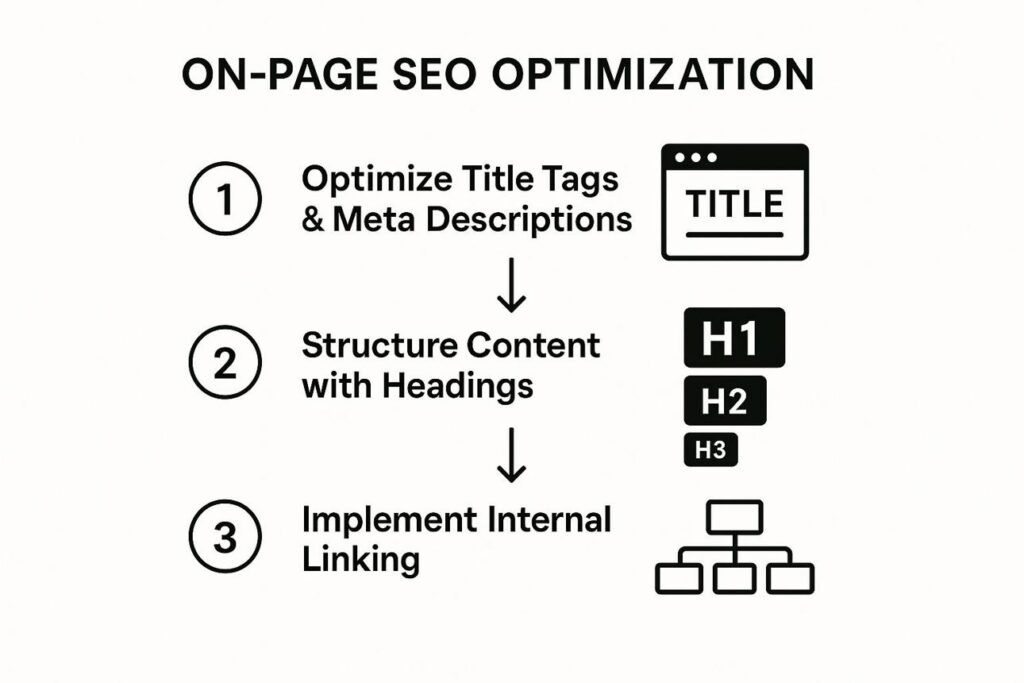
Page titles are an important part of this process. A title should clearly describe what visitors can expect from the page. When appropriate the primary keyword can be included naturally. However a title should never be written only for a search engine.
For example a title such as On Page SEO Services for Better Website Visibility communicates the topic clearly. A vague title such as Our Services provides much less information.
Meta descriptions can provide additional context. They appear in search results in many situations and can influence whether a person decides to visit a page. A useful description should summarise the page naturally and give the visitor a reason to learn more.
Headings are also important for content organisation. A long page can become difficult to read if everything is placed under one heading. Breaking the content into meaningful sections allows readers to scan the page and quickly find information.
The main heading should communicate the central subject. Supporting headings can then cover related ideas. On an SEO page these could include content optimisation internal linking image SEO search intent and mobile usability.
Content itself remains at the centre of on page SEO. A page should provide information that is genuinely useful. Search engines have become better at understanding context and language. This means businesses do not need to repeat an exact keyword in every sentence.
Instead content should naturally include the main topic and related terminology. A page about on page SEO can naturally discuss title tags meta descriptions headings internal links website content and image optimisation without forcing each phrase repeatedly.
Search intent should influence how the content is written. If someone searches for how on page SEO works they probably want an explanation. If they search for on page SEO services they may be looking for an agency or consultant. The page should provide the type of information that matches the search.
URL structure is another part of website optimisation. A clean URL can make a page easier to understand. A simple address containing the main topic is generally clearer than a long string of random characters.
Internal linking helps connect related pages. Imagine a website that has a page about SEO services and another page about technical SEO. An article discussing technical SEO can naturally link to the relevant service page. This gives visitors an easy way to continue exploring the website.
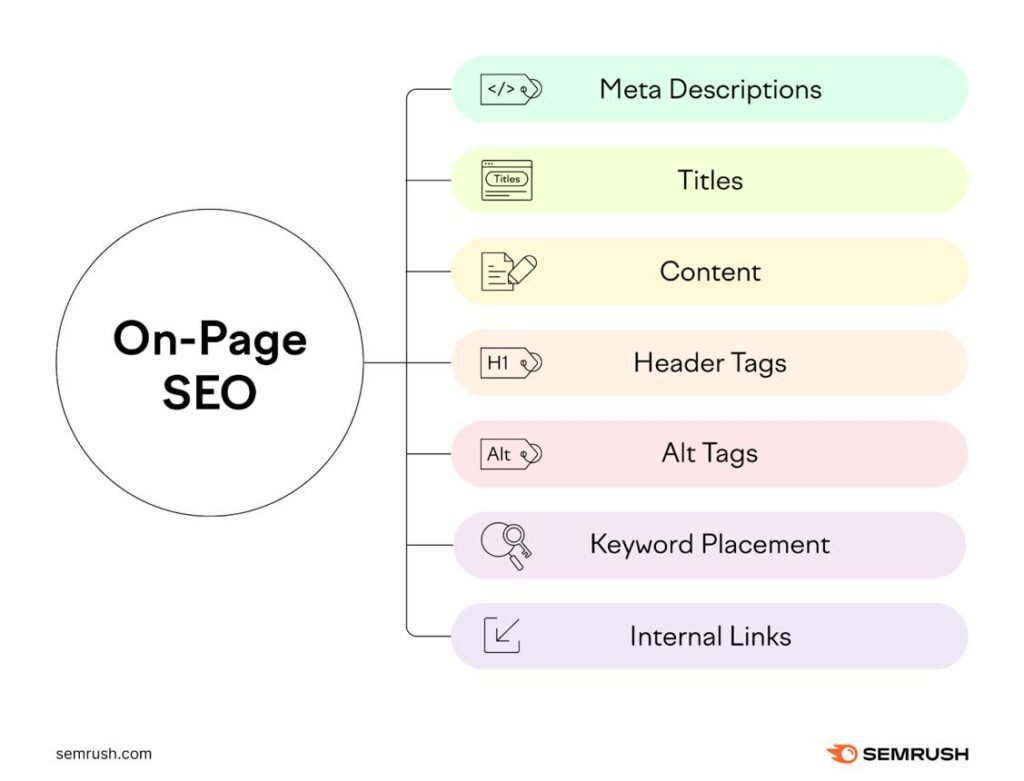
Internal links can also help search engines understand relationships between pages. Important pages should be connected through a logical website structure rather than isolated from the rest of the site.
Images can improve the experience of a webpage. They can break up long sections and help explain complicated ideas. However images should also be optimised because large files can affect loading speed.
Image filenames can be descriptive. Alt text can explain what the image represents. This information should be written naturally rather than stuffed with keywords.
Mobile optimisation has become another essential part of on page SEO. People increasingly browse websites on phones and tablets. A page that looks excellent on a desktop but becomes difficult to read on a mobile device can create a poor user experience.
Text should remain readable. Buttons should be easy to tap. Images should fit the screen. Navigation should not feel complicated. These details contribute to the overall quality of a page.
Page speed also matters. Visitors generally prefer websites that load quickly. Slow pages can lead people to leave before they read the content. Businesses should therefore consider image compression caching hosting and other performance improvements.
Content structure also influences readability. Shorter paragraphs are usually easier to read online than very large blocks of text. However the article should still feel like a natural blog rather than a collection of disconnected fragments.
This is why paragraph flow is important. One idea should naturally lead into the next. A good article should feel like someone is explaining the subject to the reader rather than simply inserting keywords into a template.
On page SEO should also consider the overall user journey. A visitor who lands on an article should be able to understand the topic quickly. If they want more information they should be able to find related pages. If they are interested in a service they should have an obvious way to continue.
Service pages often benefit from clear explanations of benefits process and expectations. Blog articles can focus more heavily on education. Product pages can focus on features benefits specifications and purchasing information.
The content format should match the purpose of the page.
A common mistake is assuming that longer content automatically produces better SEO results. It does not. A page should be as detailed as necessary to satisfy the search intent. Adding unnecessary paragraphs simply to increase word count can make the content less useful.
Another common mistake is keyword stuffing. Repeating the same phrase too many times can make an article sound unnatural. Modern SEO is much more focused on relevance context and usefulness.
The best on page SEO strategy therefore combines technical elements with strong content. Titles should be clear. Headings should be useful. Content should answer questions. Internal links should make sense. Images should support the subject. Pages should work well across devices.
Businesses should also review existing pages regularly. Information can become outdated. Services may change. Old statistics may no longer be accurate. Broken links may appear. Updating pages can help keep the website useful.
On page SEO is not a single change that guarantees a ranking. It is a collection of improvements that make a website clearer and more valuable.
When these improvements are applied consistently they can create a stronger website foundation. Search engines can better understand the content and visitors can more easily find what they need.
